5 Forbidden Occult Books They Tried to Suppress
5 Forbidden Occult Books They Tried to Suppress
Throughout history, certain books have drawn resistance not because they were fictional, but because they presented structured systems for acquiring knowledge that existed outside sanctioned religious and political frameworks. In the Western esoteric tradition, suppression most often followed precision: texts that were internally coherent, methodical, and transmissible posed a challenge to centralized authority.
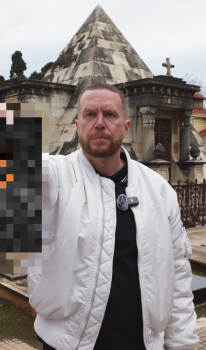
This article examines 5 forbidden occult books they tried to suppress, along with one additional modern work that, while not traditionally occult, continues the same intellectual lineage. The analysis expands on a video filmed in Valencia, where these texts are discussed in sequence and in context.
My perspective is informed by long-term ceremonial practice and formal initiation as a Zelator of the Astrum Argentum, an initiatory system concerned with direct knowledge rather than belief. The emphasis here is historical and technical: what these books contain, why they were resisted, and how they continue to influence modern esoteric thought.
5 Forbidden Occult Books They Tried to Suppress
Why Certain Occult Books Were Suppressed
In pre-modern Europe and the Near East, access to metaphysical knowledge was regulated through lineage, ordination, or institutional authority. Occult texts disrupted this model in three consistent ways:
- They proposed direct engagement with non-human intelligence or higher principles
- They reduced spiritual authority to repeatable operations
- They reframed reality as law-governed rather than purely doctrinal
Books that merely speculated were tolerated. Books that instructed were not.
Mysteriorum Libri Quinque (The Five Books of Mystery)
The Mysteriorum Libri Quinque, also known as The Five Books of Mystery, records one of the most detailed systems of angelic communication ever committed to writing.
Its author, John Dee, was not an isolated mystic. He was a mathematician, astronomer, cryptographer, and advisor to Queen Elizabeth I. Dee believed mathematics described the structure of the universe but not its origin. To access that origin, he pursued what he termed angelic science.
Working with a scryer, Edward Kelley, Dee documented complex symbolic languages, geometric diagrams, and ritual protocols intended to facilitate contact with intelligences he identified as angelic. The resulting system—later called Enochian magic—was neither devotional nor metaphorical. It was operational.
The manuscripts circulated privately and were never formally published during Dee’s lifetime. Portions were seized, ignored, or dismissed as delusional. The resistance was not aimed at mysticism itself, but at the implication that divine knowledge could be systematized and replicated.
The Book of Abramelin
The Book of Abramelin represents a pivotal transition in Western occultism: the movement of advanced Jewish mystical practice from oral lineage into written form.
Traditionally, practical Kabbalistic knowledge was transmitted from father to firstborn son, often later in life. This book—attributed to a mage named Abramelin and framed as a journey through Egypt—functioned as a textual workaround.
Its central operation, the Knowledge and Conversation of the Holy Guardian Angel, requires months of disciplined preparation, moral regulation, and sustained ritual work. The aim is not power, but alignment: establishing a stable point of contact between the practitioner and a guiding intelligence.
The book’s influence shaped later ceremonial systems, including the Hermetic Order of the Golden Dawn, and deeply affected Aleister Crowley, who regarded the operation as foundational.
The text survived in partial manuscripts, delayed translations, and edited editions. Full access to its unfiltered content was slow, uneven, and contested.
The Book of Lies
Written by Aleister Crowley in 1913, The Book of Lies is structured as a deliberate encryption. It contains 93 short chapters—93 being a central numerical value within Thelema.
Each chapter operates simultaneously as poetry, symbolic instruction, and technical puzzle. The text resists linear interpretation by design. Crowley assumed that symbolic technology, if presented plainly, would be misunderstood or misused.
Rather than suppression through censorship, the book was neutralized through dismissal. Critics labeled it obscure or nonsensical, while academic institutions ignored it entirely. This response was effective: the book remained accessible but largely unreadable to those without contextual training.
Transcendental Magic by Eliphas Levi
Published in 1856, Transcendental Magic by Eliphas Levi consolidated centuries of esoteric thought into a single philosophical framework.
Levi, a former Catholic deacon, viewed magic not as superstition but as the underlying structure beneath religion. His synthesis combined Kabbalah, astrology, alchemy, and classical grimoires into a theory of consciousness and will.
The book is best known for introducing the image of Baphomet. Levi intended it not as an object of worship, but as a visual representation of equilibrium and the Astral Light—the mediating substance between mind and matter.
The Church condemned the work indirectly by exclusion. Its ideas were incompatible with doctrinal authority, not because they were anti-Christian, but because they reframed religious symbolism as universal rather than exclusive.
The Cloud of Unknowing
The Cloud of Unknowing, written anonymously in 14th-century England, represents a different form of esoteric disruption.
The text advocates via negativa: the deliberate removal of all concepts, images, and intellectual structures to approach the divine through direct experience. There are no rituals, no hierarchies, and no intermediaries.
Its radical implication is that theology itself becomes an obstacle beyond a certain point. While never formally banned, the work was marginalized and softened in later interpretations. Its influence persisted quietly, shaping later Western mysticism and non-dual philosophy.
Bonus Book: Reality Transurfing
Although not an occult text in the classical sense, Reality Transurfing by Vadim Zeland belongs in this discussion.
Published in 2004, the book proposes that reality consists of multiple probability lines selected through attention and intent. Central to this model is the concept of pendulums: collective thought-forms sustained by emotional energy.
Political movements, ideological conflicts, and mass identification structures function as pendulums. Individuals become trapped within them, often at the expense of personal trajectory.
What makes the book controversial is not mysticism, but implication. It reframes social reality as participatory and energetically conditioned—a perspective that mirrors much older esoteric models using modern language.
About the Video
The accompanying video presents these six books in sequence and was filmed on location in Valencia. It serves as a concise visual overview, while this article provides historical depth and textual context.
Frequently Asked Questions
Why were these occult books suppressed?
They offered structured access to knowledge that bypassed institutional authority.
Are these books symbolic or practical?
They are symbolic systems with practical applications.
Is prior initiation required to read them?
No, but meaningful understanding requires discipline and context.
Are these texts relevant today?
Yes. Many modern psychological and philosophical models parallel their frameworks.
Why include a modern book like Reality Transurfing?
Because it restates long-standing esoteric principles without religious framing.
Where should a beginner start?
Historical study should precede practical experimentation.
Conclusion
The suppression of occult literature has rarely been absolute. More often, it has taken the form of delay, distortion, or dismissal. The books discussed here persist because they articulate models of reality that remain internally consistent, experientially verifiable, and resistant to institutional ownership.
The video and this article are intended as documentation of that lineage.
Related Articles
The Oldest Tarot Decks: From Renaissance Luxury to Modern Magic
Discover the oldest tarot decks, from the lavish Visconti-Sforza cards of 15th-century Italy to the Tarot de Marseille. Explore how these Renaissance luxuries evolved into powerful tools for modern witches.
The Evolution of Tarot Symbolism: From Medieval Allegories to Today
Explore how tarot symbolism evolved from medieval Italian courts to the Rider-Waite and Thoth decks. Discover the true roots of tarot imagery — beyond the myths.
Learn Tarot Easily with the LVX Tarot Tutor
Discover how you can learn tarot easily through the LVX Tarot Tutor — a conversational guide trained by LVX in the ancient wisdom of the cards. Explore how our carefully trained intelligence brings tarot symbolism, insight, and guidance to life.